Why your garage door will not open or close, diagnosed step by step, safely. A diagnostic inspection and written itemised estimate come before any work.
Start With What the Opener Does When You Press the Button
The most useful first observation is what the opener does when the button is pressed, because silence, a running motor with no door movement, and a door that moves a little then stops or reverses each point to a different part of the system.
Noting that behaviour accurately in a request helps a service provider prepare for inspection, even though the final diagnosis still requires a professional examination of the complete system rather than a conclusion from sound alone.
- Complete silence, with no hum, click or light, points first to power or control, including supply, remote batteries, wall-control lock settings and opener power.
- A motor that runs while the door stays still points to a disconnected drive, a failed spring or cable system, or an opener drive fault that prevents lifting.
- A door that moves a little and then stops or reverses points to an obstruction, a track or roller fault, a sensor fault, or a safety system intervening correctly.
Power, Remote and Control Faults Behind a Door That Will Not Move
Power and control faults are the simplest causes to observe, and they should be checked by observation only, because opening an opener housing or working on wiring is not a homeowner task in this guide.
A tripped breaker, an unplugged opener, a dead remote battery, a wall control left in lock mode, or a manual lock left engaged can each leave a sound door apparently dead, and each of those observations is worth including in a request.
Sensor Faults Behind a Door That Will Not Close
A door that opens normally but will not close, or that starts to close and then reverses, very often involves the safety sensors near the floor on each side of the opening, which must see each other for closing to proceed.
A blocked beam, a dusty lens, a sensor knocked out of alignment, or a damaged sensor wire can each trigger reversal, and that reversal is the safety system working as designed rather than a fault in the safety system itself.
How can you tell whether the door or the opener is the problem?
With the door fully closed, pull the emergency release and lift the door a little by hand. If it moves smoothly and feels balanced, the opener is the likely cause; if it is heavy or sticks, the door needs attention. Skip this check if a spring or cable looks broken.
Spring and Cable Failure Behind a Door That Will Not Open
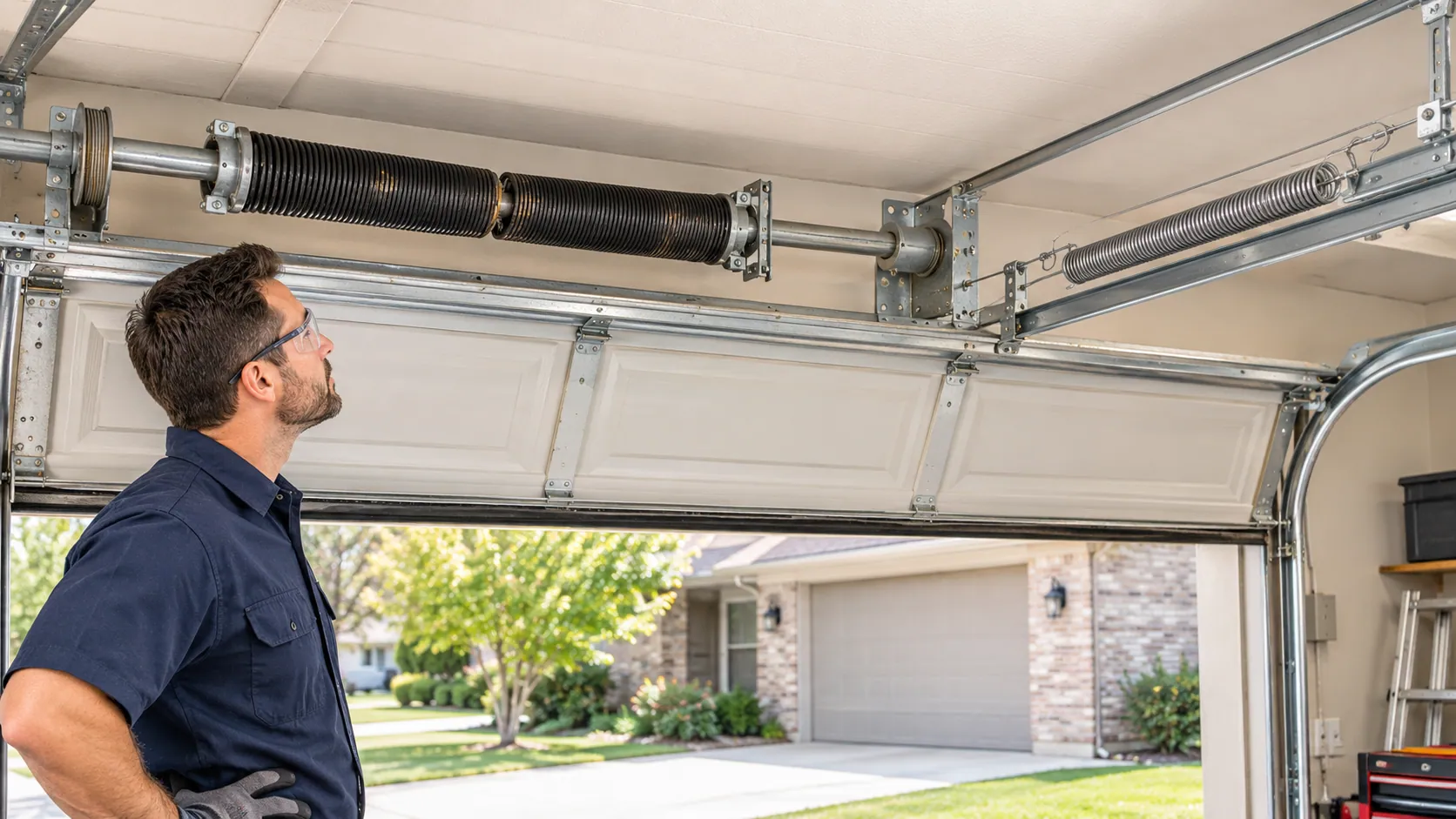
Spring and cable failure changes the weight and balance of the door itself, so the opener can no longer lift it safely, and the door may feel unexpectedly heavy, hang crooked, or stop after a loud bang.
A visible gap in a torsion spring coil, a slack or snapped lift cable, or a door that is level on one side and low on the other all point to this system, and all of them require professional handling without exception in this guide.
Track, Roller and Panel Faults Behind a Door That Stops or Binds
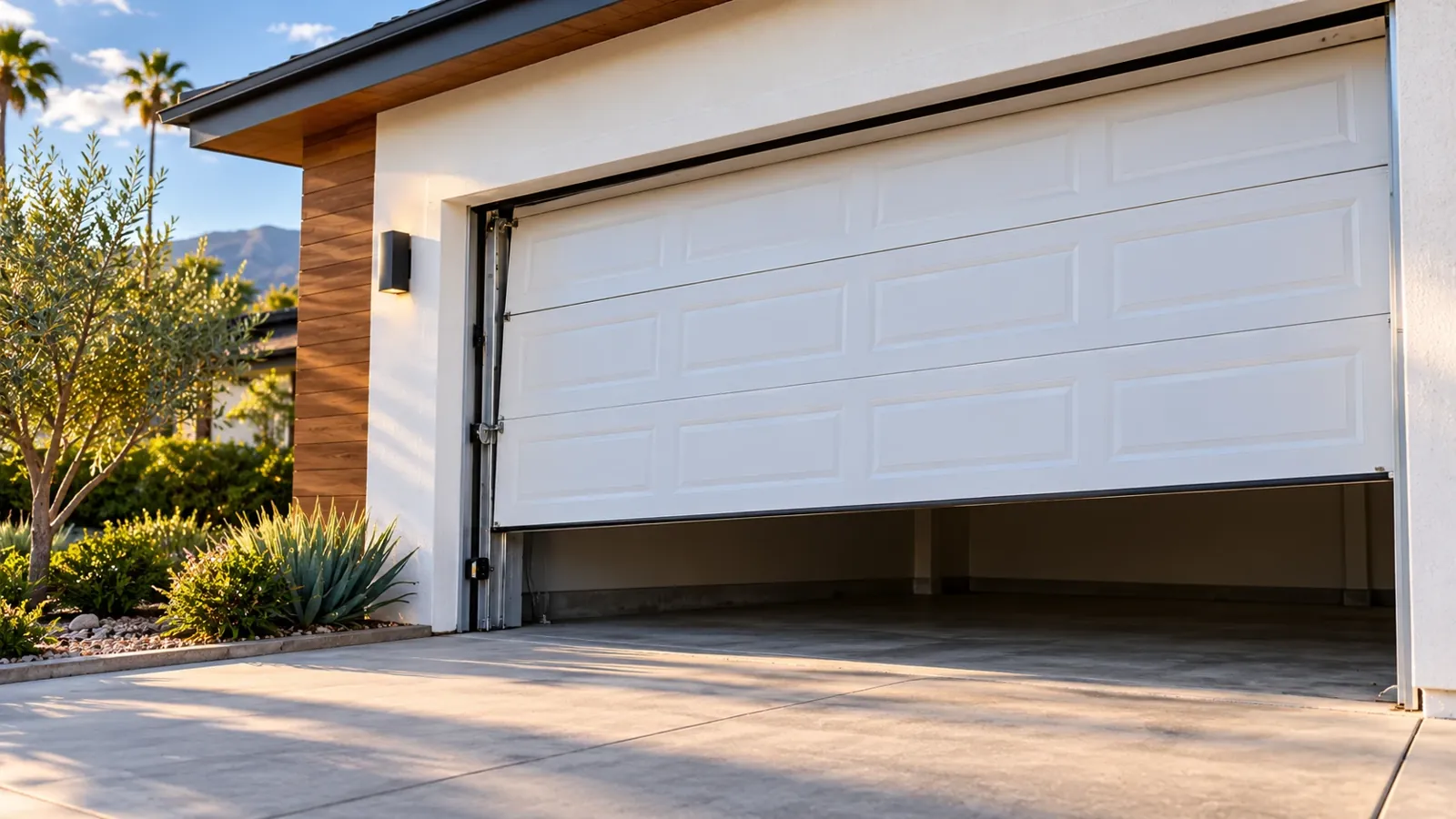
Track, roller and panel faults create friction and binding that the opener reads as resistance, so the door may stop partway, move unevenly, make a grinding noise, or reverse even though the opener and sensors are working.
A bent track section, a worn or seized roller, a damaged panel that no longer travels squarely, or debris in a track can each cause that binding, and the inspection must examine the full travel path rather than the single point where the door stops.
Can hot or cold weather stop a garage door from working?
It can. Cold thickens lubricant and can freeze the bottom seal to the floor, and heat dries out seals and lubricant so the door drags. Note the weather when the problem started.
Opener Types and Opener Faults Explained Without Dealer Claims
Opener faults depend in part on opener type, and the three types readers most often meet are belt-drive openers, chain-drive openers and wall-mount openers, each with different noise, drive and space characteristics.
Controls for those openers include remotes, keypads and wall controls, and a fault in any control, in the drive gear, or in the opener motor can leave the motor running without door movement, which is why the opener-behaviour observation at the start of this guide matters so much.
Diagnostic Inspection Checklist for a Door That Will Not Open or Close
A professional diagnostic inspection for this fault examines the door as a complete system, because a door that will not open or close can involve more than one failing part, and treating only the first fault found can leave the next failure unexamined.
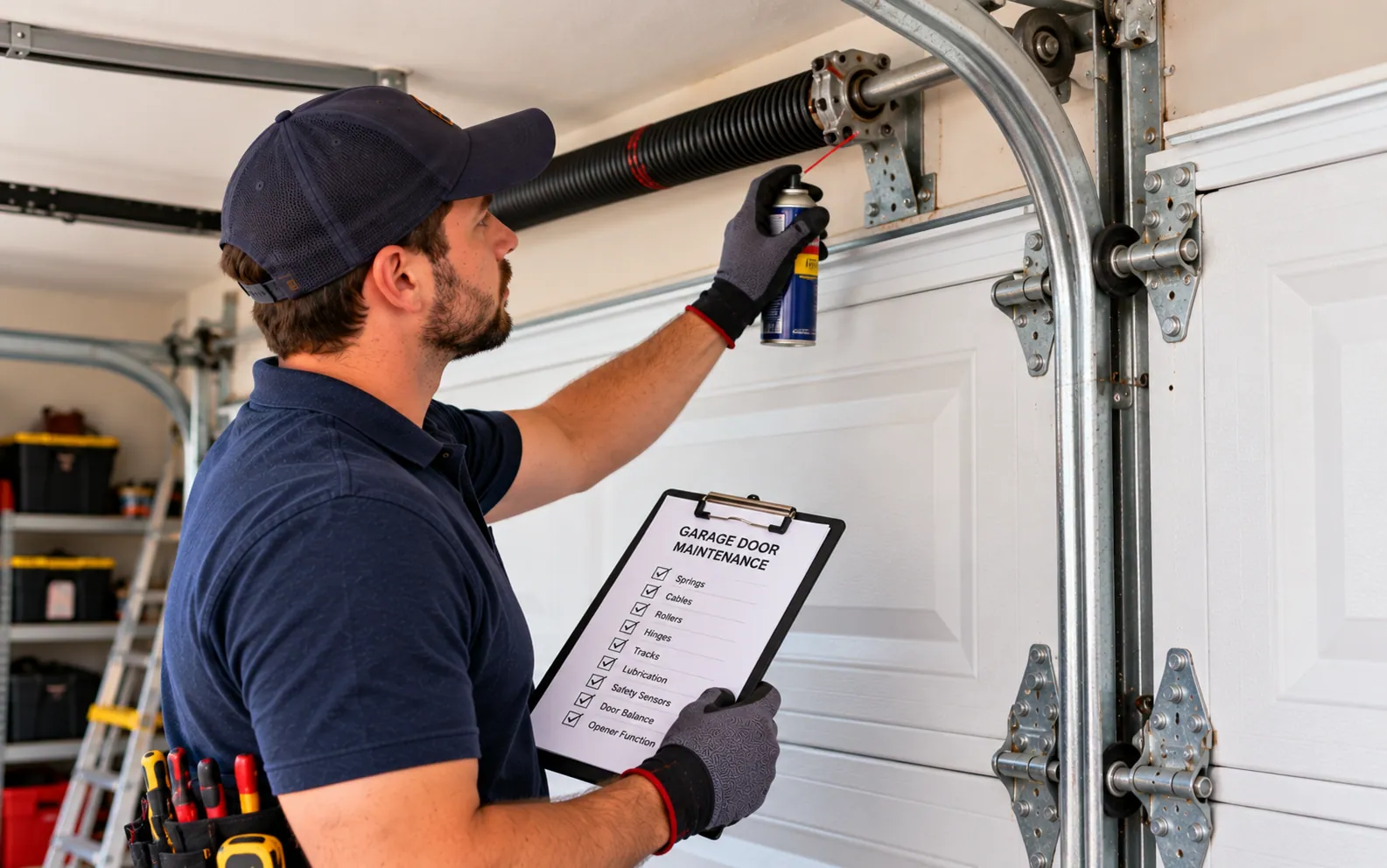
The checklist covers power and controls, sensors and auto-reverse operation, springs and cables, tracks and rollers, panels and hinges, system balance, track alignment and the opener itself, with findings set out in the written itemised quote.
- Power and controls are checked by observation of supply, remote response, keypad response and wall-control behaviour, without homeowner repair of wiring or opener internals.
- Sensors and auto-reverse operation are tested for beam alignment, lens condition and correct reversal, so a closing fault is not confused with a lifting fault.
- Springs, cables, tracks, rollers, panels and balance are examined together, because weight, alignment and travel interact on every cycle of the door.
Safety Exclusions for This Diagnostic Guide
Do not touch springs, lift cables or bottom brackets, do not force a door that is heavy, crooked or jammed, and do not keep pressing the remote against a door that will not move, because each of those actions can increase injury risk or damage.
Keep people, children, pets and vehicles clear of a door that is behaving unpredictably, and submit a request or an urgent request with the observed behaviour, city and ZIP, rather than attempting the professional-only work described in this guide.
Repair or Replacement When a Door Will Not Open or Close
Repair is normally the right route when the door structure is sound and a specific failed part, such as a sensor, cable, roller or spring, can be renewed and the full system then passes balance, alignment and auto-reverse checks.
Replacement becomes the stronger option when panels are extensively damaged, the door is repeatedly failing across several systems, safety controls cannot be restored to reliable operation, or repeated repairs no longer give a safe and lasting door.
Why a Phone Guess Is Not a Diagnosis or a Price
A phone guess cannot weigh the door, test balance, examine spring type, or check track alignment, so a very low figure given without inspection is a sales figure rather than a diagnosis, and it will almost always change once the door is actually examined.
The protection against that change is the same on every page of this website, namely a diagnostic inspection followed by a written itemised quote that the customer approves before work begins.
Request a Diagnostic Inspection for Your Stuck Door
Describe what the opener does when you press the button, what the door does now, and whether a loud bang was heard, then include your city and ZIP so a local garage door professional can arrange inspection.
The inspection will examine power and controls, sensors, springs, cables, tracks, rollers, panels, balance, alignment and the opener, and the written itemised quote that follows will set out the work to approve.
- Do not touch springs, cables or bottom brackets, and do not force a door that is heavy, crooked or jammed.
- Call +1 (747) 283-0100 if the door leaves the property insecure or a vehicle trapped, and state that urgency at the start of the call.
Related help for this page: Garage Door Repair Prices.