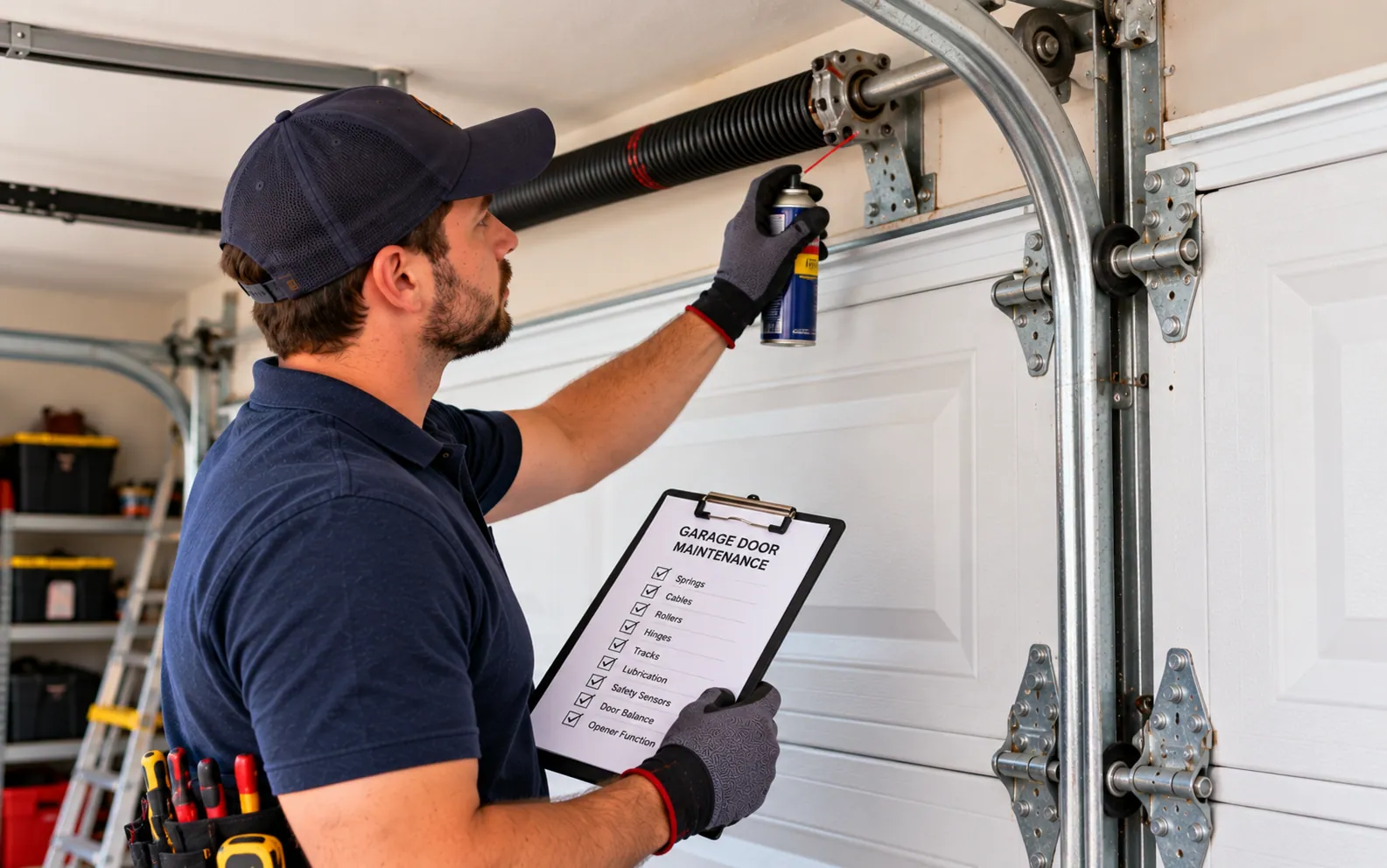
Learn the key differences between torsion and extension garage door springs, including their operation, safety, lifespan, and replacement costs. Find out which spring system may suit your home and when to request professional service.
Torsion vs. Extension Garage Door Springs: Key Differences, Safety, and Replacement
Your garage door may look simple from the outside, but its spring system does an important job every time the door opens or closes. Garage door springs counterbalance the door's weight, helping it move smoothly while reducing the load placed on the opener. Most residential sectional garage doors use one of two spring systems: torsion springs or extension springs. Both are designed to help lift and lower the door, but they work differently, have different installation requirements, and present different safety considerations. Knowing which type of spring your garage door uses can help you understand repair recommendations, identify potential problems, and make a more informed decision when professional service is needed. In this guide, we explain how torsion and extension garage door springs work, how to identify them, how they compare in safety and performance, and what homeowners should consider before replacing or upgrading a spring system. If your garage door is stuck, unusually heavy, crooked, or making a loud noise, avoid operating it until the spring system has been inspected. Request a professional garage door spring inspection through Abul Hassan to understand your service options and receive a written quote before work begins.
What Is the Difference Between Torsion and Extension Garage Door Springs?
The main difference is how each spring stores and releases energy. Torsion springs are mounted horizontally on a metal shaft above the garage door opening. They store energy by twisting as the door closes and release that energy as the door opens. Extension springs are installed along the horizontal tracks on either side of the garage door. They store energy by stretching as the door closes and contract to help lift it. Both systems perform the same general function: counterbalancing the weight of the garage door. However, their mounting locations, hardware, operation, and safety requirements are different. Torsion Springs at a Glance
- Installed above the garage door opening.
- Mounted around a horizontal metal shaft.
- Store energy through twisting force.
- Work with cable drums and lift cables.
- Commonly used on modern residential garage doors.
- Available in different wire sizes, lengths, and cycle ratings.
Extension Springs at a Glance
- Installed along the horizontal garage door tracks.
- Stretch and contract during door movement.
- Work with pulleys and lifting cables.
- Commonly found on older or lighter garage door systems.
- Require properly installed safety cables for containment.
- Must be matched to the door's weight and hardware configuration.
The correct spring system depends on the garage door's design, weight, available space, and existing hardware. One type should not be selected simply because it appears cheaper or easier to install.
What Are Torsion Garage Door Springs?
Torsion springs are tightly wound steel coils installed on a metal shaft above the garage door. When the door closes, the springs wind up and store mechanical energy. When the door opens, they unwind and help lift the door through a system of cable drums and lift cables. A torsion spring system may use one or two springs, depending on the door's design and weight.
How Does a Torsion Spring System Work?
The main components of a torsion spring system include:
- Torsion spring: Stores and releases energy through twisting.
- Torsion shaft: Supports the spring assembly above the door.
- Winding cone: Holds the spring and allows controlled winding during professional installation.
- Stationary cone: Secures the spring to the center support.
- Cable drums: Guide the lift cables as the shaft rotates.
- Lift cables: Transfer the lifting force to the bottom of the door.
- Center bearing plate: Supports the shaft and spring assembly.
- End bearing plates: Support the shaft near the ends of the opening.
When the garage door closes, the springs wind up and store energy. As the door opens, that stored energy helps turn the shaft and cable drums, allowing the cables to lift the door.
Advantages of Torsion Springs
1. Controlled and balanced movement
A properly sized torsion spring system can provide smooth, balanced lifting across the width of the garage door.
2. Suitable for heavier doors
Torsion systems are available in configurations designed for heavier residential and some commercial garage doors.
3. Different cycle-rating options
Homeowners may be able to choose standard or higher-cycle spring options when replacing an existing system, provided the replacement is correctly specified for the door.
4. Spring containment
A broken torsion spring generally remains around the shaft rather than stretching along the track. This does not make the system risk-free, but it changes how the spring behaves when it fails.
Potential Limitations of Torsion Springs
Torsion springs require appropriate clearance above the garage door opening, compatible mounting hardware, and accurate spring sizing. Their installation and adjustment also involve stored energy that can cause serious injuries if handled incorrectly. The spring's wire size, inside diameter, length, winding direction, and cycle rating must be considered when selecting a replacement.
What Are Extension Garage Door Springs?
Extension springs are long steel coils installed along the horizontal tracks on both sides of the garage door. Instead of twisting around a shaft, they stretch as the door closes and contract as the door opens. Most extension spring systems use a pair of springs, with one installed on each side of the door.
How Does an Extension Spring System Work?
An extension spring system commonly includes:
- Extension springs: Stretch to store energy and contract to assist lifting.
- Pulleys: Guide the cables through the lifting system.
- Extension cables: Transfer force between the springs and the door.
- Safety cables: Pass through the springs to help contain them if they break.
- Track brackets: Support the track and related hardware.
When the garage door closes, the extension springs stretch and store energy. When the door opens, the springs contract and help pull the door upward through the cable and pulley arrangement.
Advantages of Extension Springs
1. Lower initial cost in some installations
Extension spring systems may have a lower upfront replacement cost than certain torsion configurations. Actual pricing depends on the door and required parts.
2. Suitable for compatible older doors
Many older residential garage doors were designed around extension spring systems. A correctly sized replacement may be appropriate when the existing configuration is in good condition.
3. Useful where overhead clearance is limited
Some extension spring arrangements can work in garage configurations where the available space above the door is limited.
Potential Limitations of Extension Springs
Extension springs stretch during operation and need compatible pulleys, cables, and mounting hardware. Their performance can be affected by wear, incorrect sizing, or uneven tension. Most importantly, extension spring systems need properly installed safety cables. If an extension spring breaks without suitable containment, it can move forcefully and create a serious hazard. Homeowners should not attempt to install, adjust, or replace extension springs themselves.
Torsion vs. Extension Springs: Complete Comparison
The following comparison explains the main differences homeowners should understand before arranging garage door spring repair or replacement.
Comparison Torsion Springs Extension Springs Installation location Above the garage door opening Along the horizontal tracks Energy storage Twisting force Stretching force Main hardware Shaft, cones, drums, cables Pulleys, cables, track hardware Typical configuration One or two springs Usually a pair Door movement Can provide smooth, balanced lifting Depends on matched spring tension and cable setup Overhead space Requires suitable shaft and spring clearance May suit some low-headroom configurations Safety consideration High stored torsional energy Safety cables are important for containment Replacement requirements Correct spring dimensions and winding specifications Correct spring rating, length, and compatible pulley/cable hardware Cost considerations Depends on spring type, size, labor, and configuration Depends on spring type, size, labor, and configuration Best choice Depends on door design and requirements Depends on door design and requirements Important: Neither spring type is automatically the right choice for every home. The correct system must be selected according to the garage door's weight, dimensions, track arrangement, available clearance, and manufacturer specifications.
How to Identify Whether Your Garage Door Has Torsion or Extension Springs
You can often identify the spring type by looking at its location from inside the garage. Do not touch the springs, cables, cones, brackets, or other tensioned hardware.
How to Identify Torsion Springs
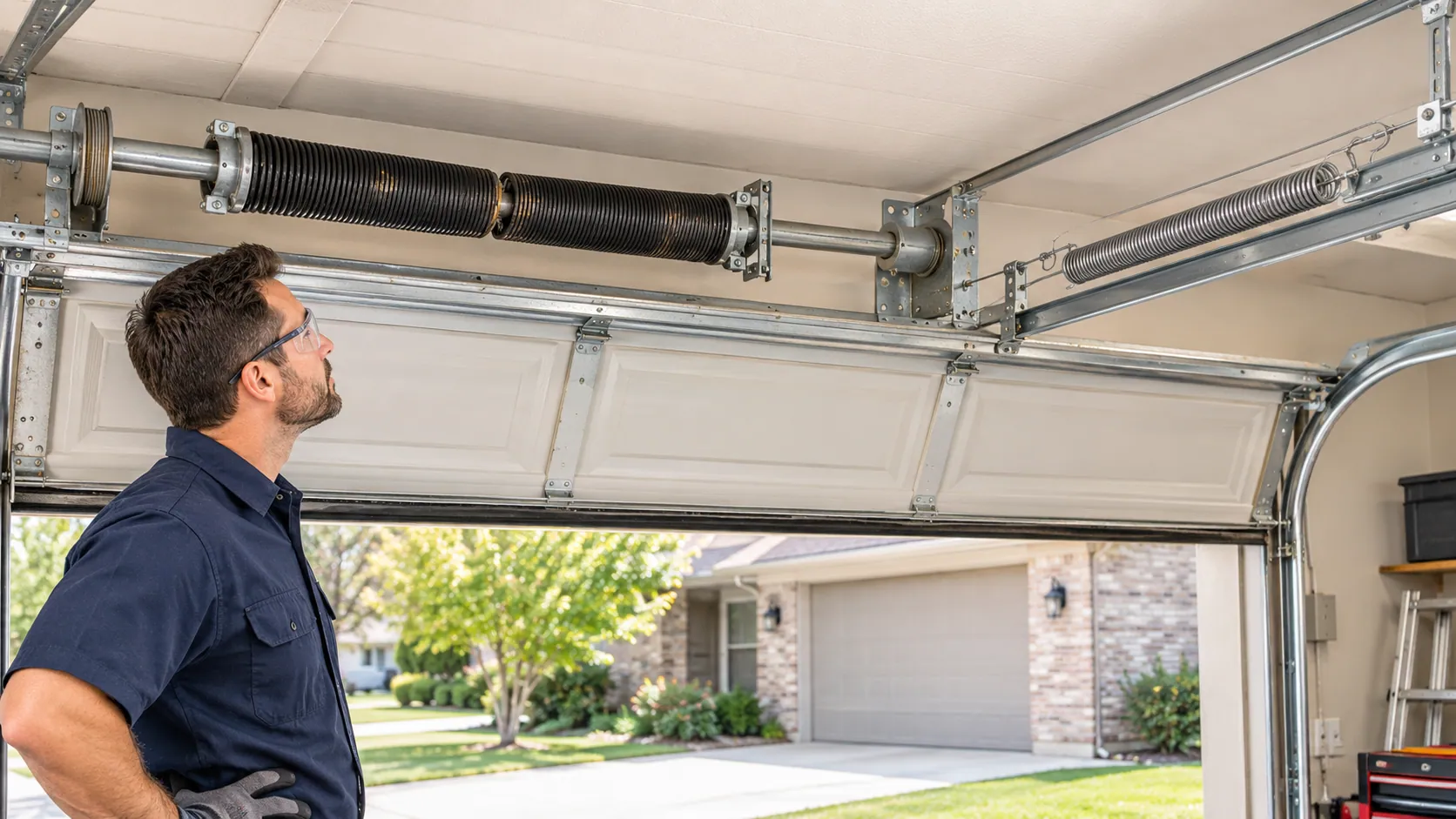
With the garage door closed, look above the door opening from a safe distance. You may see:
- A horizontal metal shaft above the door.
- One or two tightly wound steel coils around the shaft.
- Cable drums near the ends of the shaft.
- Lift cables running down toward the bottom corners of the door.
If you see this arrangement, your garage door likely uses a torsion spring system.
How to Identify Extension Springs
Look along the horizontal tracks running from the door opening toward the back of the garage. You may see:
- Long, stretched steel coils running parallel to the tracks.
- Pulleys attached to the lifting cables.
- Cables connected to the spring and door hardware.
- A safety cable passing through the center of each spring.
If you see this arrangement, your garage door likely uses extension springs.
What If You Cannot Identify the Spring Type?
Some garage doors use specialized counterbalance systems that may not look exactly like standard torsion or extension springs. For example, certain systems enclose the spring assembly inside a tube. If you cannot identify the system confidently, do not remove covers or attempt to inspect the internal mechanism. A garage door professional can identify the system and determine which parts are compatible.
Which Garage Door Spring Is Safer?
Safety is one of the most important differences between torsion and extension spring systems. Both types store significant mechanical energy. A damaged or incorrectly handled spring can cause serious injuries.
Torsion Spring Safety
Torsion springs are mounted on a shaft above the door. When a spring breaks, the broken section generally remains around the shaft. However, the remaining spring tension and attached hardware can still be dangerous. Never attempt to loosen winding cones, remove spring brackets, adjust set screws, or release spring tension.
Extension Spring Safety
Extension springs stretch during operation. If a spring breaks, it can move forcefully unless the system has suitable containment. A safety cable should pass through each extension spring and be securely anchored according to the system's design. This cable helps contain a broken spring and reduces the risk of it becoming a projectile.
Garage Door Spring Safety Rules for Homeowners
- Do not attempt DIY spring replacement.
- Do not loosen spring brackets or winding hardware.
- Do not pull or cut a damaged spring cable.
- Do not operate a garage door with a visibly broken spring.
- Keep children and pets away from the garage door.
- Do not stand beneath a door that appears unstable or uneven.
- Request inspection from a qualified garage door professional.
Garage door manufacturer safety guidance warns that springs, cables, and related hardware can remain under extreme tension. Repairs and adjustments should be handled by trained door-system technicians using the correct tools and instructions.
Which Spring Lasts Longer?
Garage door spring lifespan is usually measured in cycles, not simply years. One cycle generally means one complete opening and closing of the garage door. A spring rated for 10,000 cycles may reach that rating sooner in a busy household than in a home where the garage door is used only occasionally.
Torsion Spring Lifespan
Many standard torsion springs are rated around 10,000 cycles, while higher-cycle options are also available. Actual lifespan depends on the spring specification, door weight, installation, maintenance, and frequency of use.
Extension Spring Lifespan
Extension springs also have cycle ratings, but the exact rating varies by manufacturer and product. Their service life depends on correct sizing, the condition of the pulleys and cables, and how frequently the door operates.
What Affects Garage Door Spring Life?
Several factors can shorten the life of either spring type:
- Frequent opening and closing.
- Incorrect spring sizing.
- An unbalanced garage door.
- Excessive door weight.
- Rust and corrosion.
- Worn pulleys, cables, bearings, or drums.
- Poor installation or adjustment.
- Lack of routine inspection.
If your garage door is used many times each day, ask about higher-cycle replacement options that are compatible with your door.
Can You Replace Extension Springs With Torsion Springs?
In some cases, an existing extension spring system can be converted to a torsion spring system. However, this is not a simple spring-for-spring replacement. A conversion may require changes to the mounting arrangement, shaft, spring assembly, cables, and other hardware. The garage must also have suitable overhead clearance and structural support. Before recommending a conversion, a professional should evaluate:
- Garage door weight and dimensions.
- Existing track and hardware configuration.
- Available headroom above the door.
- Header strength and mounting points.
- Compatibility with the door and opener.
- Total conversion cost compared with repairing the existing system.
A torsion conversion may be worth considering for some homes, but it is not necessary or suitable for every garage door. The decision should be based on the actual condition and design of the door.
How Much Does Garage Door Spring Replacement Cost in the USA?
Garage door spring replacement costs vary across the United States. There is no single price that applies to every home because the type of spring, door size, required parts, labor, and local service rates all affect the final quote. The following factors commonly influence the cost: 1. Type of Spring Torsion and extension systems use different parts and installation methods. The spring configuration affects the replacement process and the total cost. 2. Spring Size and Rating A heavier or wider garage door may require springs with different dimensions and lifting capacity. Higher-cycle options may also cost more than standard replacements. 3. Number of Springs Some doors use one spring, while others use two. If a two-spring system has one failed spring, a professional may recommend replacing both when they are the same age and have similar wear. The recommendation should be based on the system's condition. 4. Additional Hardware Damaged cables, worn pulleys, cable drums, bearings, brackets, or other components may need attention. These should be inspected before a final quote is provided. 5. Labor and Location Labor rates and service charges vary by market. Emergency appointments, after-hours visits, and difficult installations may also affect the price.
What Should a Garage Door Spring Replacement Quote Include?
Before approving work, ask for a written quote that clearly explains:
- The type and number of springs being replaced.
- Spring specifications and cycle rating, where available.
- Any additional hardware or cable work.
- Labor and service charges.
- Whether the quote includes testing and door-balance checks.
- Any warranty terms offered by the service provider.
At Abul Hassan, homeowners can request a free written quote and review the full price before approving work. No work should begin until the customer has reviewed and approved the quoted price.
Signs Your Garage Door Spring May Need Replacement
Although this article focuses on spring types, recognizing failure symptoms can help you decide when to request an inspection. Common warning signs include:
1. The Garage Door Will Not Open
A broken or damaged spring may prevent the door from lifting properly. The opener may run, but the door may remain closed or move only slightly.
2. The Door Feels Extremely Heavy
Springs counterbalance the door's weight. When a spring fails, the door may become too heavy for the opener to lift safely.
3. The Door Opens Unevenly
If one side moves differently from the other, the problem may involve spring tension, cables, or other lifting hardware.
4. You Hear a Loud Bang
A breaking garage door spring can produce a sudden, loud noise that sounds like something striking the garage.
5. You Can See a Gap in the Spring
A visible separation in a torsion spring coil may indicate that the spring has broken.
6. The Garage Door Closes Too Quickly
A spring problem can affect the door's balance and movement. If the door drops or moves unpredictably, stop using it and request professional inspection. These symptoms can also be caused by damaged cables, tracks, rollers, or other components. A proper inspection is needed to identify the actual problem.
Should You Replace Both Garage Door Springs at the Same Time?
If your garage door uses two springs and one breaks, replacing both may be recommended when they were installed together and have experienced similar wear. The reason is straightforward: both springs have usually completed a similar number of operating cycles. If one has reached the end of its service life, the other may also be approaching failure. However, replacing both is not an automatic requirement for every garage door. The professional should consider:
- Whether both springs are the same age.
- Whether they have matching specifications.
- The condition of the remaining spring.
- Whether the door is balanced correctly.
- The manufacturer's recommendations.
Ask for the reason behind the recommendation and have the cost of both options explained before approving the work.
Can a Garage Door Opener Work With a Broken Spring?
A garage door opener is designed to move a properly balanced door. It is not designed to lift the full weight of a door after its spring system fails. Trying to operate the opener with a broken spring can place excessive strain on the motor, gears, trolley, and other components. If you suspect a broken spring:
- 1Stop using the automatic opener.
- 2Do not try to lift the door manually if it feels unusually heavy.
- 3Keep people and pets away from the door.
- 4Request a professional inspection.
Avoid repeatedly pressing the opener button to see whether the door will move. This can make the situation worse.
How Professionals Inspect and Replace Garage Door Springs?
A proper spring service should involve more than installing a replacement coil. The complete counterbalance system must be checked to ensure the door operates correctly. Depending on the door and the issue, the service process may include: Step 1: Identify the Spring System The professional identifies whether the door uses torsion springs, extension springs, or a specialized counterbalance system. Step 2: Inspect the Garage Door The inspection may include the door panels, tracks, hinges, rollers, cables, pulleys, brackets, shaft, and other related hardware. Step 3: Check Spring Specifications The professional determines the appropriate replacement specifications based on the door's weight, dimensions, and existing configuration. Step 4: Explain the Recommended Work The homeowner should receive an explanation of the issue, the recommended repair, and any additional work that may be required. Step 5: Provide a Written Quote The complete price should be explained before the customer approves the work. Step 6: Complete the Approved Service After approval, the professional carries out the agreed work using the appropriate tools and installation procedures. Step 7: Test Door Operation The completed service should include checks of door balance, movement, cables, hardware, and safety-related operation as appropriate for the system.
Garage Door Spring Service in Six US Cities
Garage door spring problems can occur in any region of the United States. However, the correct spring type and replacement specifications depend on the individual garage door—not just the city or climate. Abul Hassan provides a way for homeowners in its listed service areas to request garage door assistance and review service options from local professionals. Homeowners in the following six locations can explore garage door spring service:
Garage Door Spring Service in Burbank, California
If your garage door in Burbank, CA, has become heavy, uneven, or difficult to open, the spring system may need inspection. A professional can identify whether the door uses torsion or extension springs and explain the appropriate repair options.
Garage Door Spring Service in Columbia, South Carolina
A garage door in Columbia, SC, may develop spring or cable problems after repeated daily use. If you hear a loud bang or notice that the door is no longer balanced, stop operating it and request an inspection.
Garage Door Spring Service in Fort Wayne, Indiana
Homeowners in Fort Wayne, IN, can request help when a garage door spring breaks, the door becomes difficult to lift, or the opener struggles to move the door. The spring type and door configuration should be checked before replacement.
Garage Door Spring Service in Huntsville, Alabama
If your garage door in Huntsville, AL, opens unevenly or makes unusual noises, the issue may involve the spring system or related lifting hardware. A professional inspection can help identify the cause.
Garage Door Spring Service in Knoxville, Tennessee
A damaged spring can leave a garage door in Knoxville, TN, stuck or unsafe to operate. Request an inspection to understand the condition of the springs, cables, and other counterbalance components.
Garage Door Spring Service in Lubbock, Texas
For homeowners in Lubbock, TX, a garage door that feels unusually heavy or will not open properly may require spring service. The correct replacement should be selected according to the door's weight and existing hardware. Need help with a garage door spring problem? Submit a service request through Abul Hassan. Share your location and describe the issue so the available service options can be reviewed. You can request a free written quote and approve the full price before any work begins.
How Abul Hassan Helps Homeowners Request Garage Door Spring Service
Abul Hassan helps homeowners request garage door services through a network of local garage door professionals. The process is designed to make it easier to understand the service options before approving a repair. Submit your request: Share your location and explain what is happening with your garage door. Review service options: Abul Hassan helps identify an appropriate local professional for the requested work. Discuss the problem: The professional can inspect the garage door and explain the recommended service. Receive a written quote: Review the proposed work and full price before making a decision. Approve the work: Service proceeds only after you approve the quoted price. Stay informed: Abul Hassan remains involved in the request process through completion. Whether you need an inspection for a broken torsion spring, an extension spring problem, or related garage door hardware, start by explaining the issue and requesting a quote.
Request Garage Door Spring Service Today
A broken or worn garage door spring should not be ignored. Continuing to operate an unbalanced door can create additional damage and safety risks. If you are in Burbank, Columbia, Fort Wayne, Huntsville, Knoxville, or Lubbock, submit a service request through Abul Hassan to review your available options. Get a Free Written Quote — Review the Price Before Approving Any Work.
Frequently Asked Questions About Torsion and Extension Garage Door Springs
1. What is the main difference between torsion and extension garage door springs?
Torsion springs store energy by twisting around a shaft above the garage door. Extension springs store energy by stretching along the horizontal tracks on the sides of the door.
2. Are torsion springs better than extension springs?
Torsion springs can provide smooth, balanced lifting and are commonly used on modern residential doors. Extension springs may be suitable for certain older or low-headroom installations. The better option depends on the garage door's design, weight, and available space.
3. How can I tell which garage door spring I have?
Look above the closed garage door. Coiled springs mounted around a horizontal shaft usually indicate a torsion system. Long springs running along the horizontal tracks usually indicate an extension system. Do not touch the hardware while identifying it.
4. Are extension garage door springs dangerous?
Extension springs store mechanical energy and can move forcefully if they break. Properly installed safety cables help contain a broken spring. Damaged or missing safety cables should be inspected by a professional.
5. Do torsion springs last longer than extension springs?
Lifespan depends on the spring's cycle rating, installation, door weight, and usage. Some torsion systems offer higher-cycle options, but the product specifications should be compared rather than assuming every torsion spring lasts longer than every extension spring.
6. Can I replace an extension spring with a torsion spring?
A conversion may be possible, but it depends on the door's construction, overhead clearance, mounting support, and compatible hardware. A professional should inspect the complete system before recommending a conversion.
7. Should I replace both garage door springs?
If two springs were installed together and have experienced similar wear, replacing both may be a practical recommendation. However, the condition and specifications of the remaining spring should be checked before deciding.
8. How much does garage door spring replacement cost in the USA?
The price depends on the spring type, size, cycle rating, number of springs, labor, and any additional hardware required. Request a written quote that explains the parts and work included before approving service.
9. Can I open my garage door with a broken spring?
You should not operate the automatic opener or try to lift a heavy door with a broken spring. The door may be unbalanced and can cause further damage or injury.
10. Do extension springs need safety cables?
Yes. Properly installed safety cables help contain extension springs if they break. Have a professional inspect the cables and their attachment points.
11. Can a garage door opener lift a door with a broken spring?
The opener is designed to operate a balanced garage door. It should not be used to compensate for a failed spring because this can damage the opener and create a safety risk.
12. Where can I request garage door spring service in the USA?
Homeowners in Burbank, CA; Columbia, SC; Fort Wayne, IN; Huntsville, AL; Knoxville, TN; and Lubbock, TX can submit a request through Abul Hassan to review available local garage door service options.
Final Thoughts
Torsion and extension garage door springs perform the same essential job, but their construction, operation, installation requirements, and safety considerations are different. Torsion springs use twisting force around a shaft, while extension springs stretch along the garage door tracks. Neither system should be adjusted or replaced without the proper training, tools, and specifications. If your garage door is heavy, uneven, stuck, or making unusual noises, stop operating it and request a professional inspection. Need help deciding what your garage door needs? Request a free written quote through Abul Hassan, review the recommended work, and approve the price before the service begins.